


Unlock $100 No Deposit Bonus at Crypto Loko Casino
September 30, 2024
2991 Views
At Crypto Loko Casino, you can try out many games without paying upfront1. They offer…
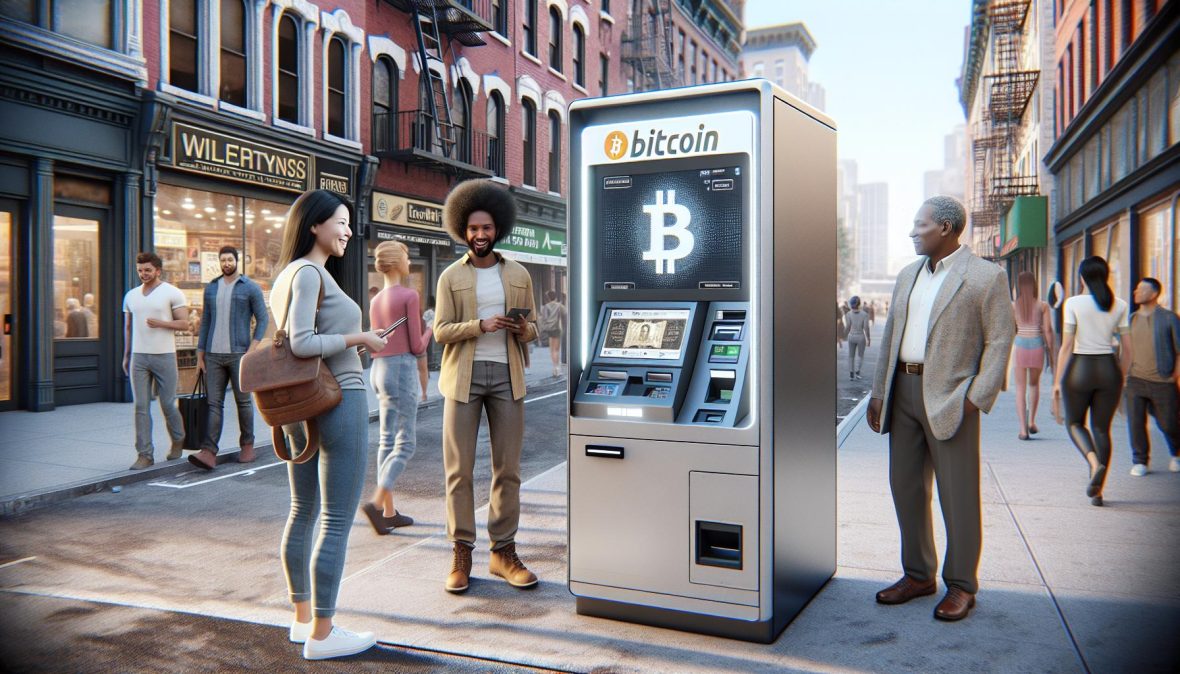
The landscape of cryptocurrency accessibility is rapidly evolving and Bitcoin ATMs are at the forefront of this digital revolution. By 2025 these innovative machines will transform how you interact with digital currencies offering unprecedented convenience and mainstream adoption.
Imagine walking down a city street and finding a Bitcoin ATM as easily as you’d spot a traditional bank machine. The technology is advancing quickly with more user-friendly interfaces enhanced security features and broader geographic distribution. You’ll soon be able to buy sell and exchange cryptocurrency with just a few simple taps making digital assets more approachable than ever before.
The future of Bitcoin ATMs isn’t just about transaction convenience—it’s about bridging the gap between traditional financial systems and the emerging digital economy. As regulatory frameworks become more defined and technological capabilities expand you’ll witness a new era of financial flexibility and decentralized monetary interactions.
The Bitcoin ATM market is projected to experience significant expansion by 2025. Technological advancements and increased cryptocurrency adoption will drive substantial growth in global Bitcoin ATM infrastructure.
Bitcoin ATM deployment will accelerate across multiple geographic regions. North America will maintain market leadership with approximately 70% of global Bitcoin ATM installations. European markets will demonstrate the fastest growth rate at 22% annually between 2023-2025.
Key adoption metrics will include:
The Bitcoin ATM market will feature prominent operators driving technological innovation:
Market players will focus on:
The strategic positioning of these companies will determine market dynamics and technological advancement in Bitcoin ATM infrastructure through 2025.

By 2025, Bitcoin ATMs will transform digital currency accessibility through cutting-edge technological innovations. These advanced machines promise enhanced user experiences and robust security features.
Bitcoin ATM interfaces will become more intuitive and user-friendly in 2025. Touchscreen technologies will enable multi-language support with simplified cryptocurrency transaction processes. Key improvements include:
Manufacturers will integrate adaptive design principles to reduce transaction complexity. Advanced AI-powered interfaces will guide users through cryptocurrency exchanges with minimal technical knowledge requirements.
Advanced security protocols will define Bitcoin ATM technology by 2025. Emerging technologies will focus on protecting user transactions and preventing potential fraudulent activities:
Blockchain-integrated security frameworks will provide transparent and immutable transaction records. Machine learning algorithms will continuously analyze transaction patterns to identify and prevent potential security breaches.
Bitcoin ATM operations in 2025 will encounter complex global regulatory frameworks that significantly impact cryptocurrency transaction methods. Compliance and adaptability emerge as critical factors for continued market expansion.
Governments worldwide are establishing structured cryptocurrency regulations that directly affect Bitcoin ATM functionality. The United States Securities and Exchange Commission (SEC) and Financial Crimes Enforcement Network (FinCEN) mandate strict compliance protocols:
Cryptocurrency exchanges and Bitcoin ATM operators must implement robust verification systems that authenticate user identities while maintaining transaction transparency. Compliance costs are estimated to represent 3-5% of operational expenses for Bitcoin ATM networks.
Regional regulatory approaches to Bitcoin ATMs demonstrate significant variations across geographic markets:
| Region | Regulatory Approach | Compliance Complexity |
|---|---|---|
| United States | Strict federal oversight | High |
| European Union | Standardized digital currency regulations | Medium |
| Asia-Pacific | Varied national frameworks | Variable |
| Latin America | Emerging regulatory structures | Low-Medium |
Cryptocurrency transaction regulations differ substantially between jurisdictions. Some countries enforce complete prohibition while others create welcoming digital currency environments. Operators must continuously adapt their compliance strategies to match local legal requirements.
Successful Bitcoin ATM networks in 2025 will prioritize flexible technological infrastructures capable of rapid regulatory adaptation. Proactive compliance monitoring and sophisticated verification technologies will distinguish market leaders.
Bitcoin ATMs represent a critical financial technology intersection between traditional banking and cryptocurrency markets. By 2025, these machines are projected to generate substantial economic transformations across global financial ecosystems.
Bitcoin ATM transaction volumes are expected to reach significant milestones by 2025. Market research indicates an average monthly transaction volume of $125,000 per machine. This projection translates to approximately $4.375 billion in total annual cryptocurrency transactions through Bitcoin ATM networks.
Key transaction volume metrics include:
Bitcoin ATM fee structures are expected to evolve dynamically by 2025. Current projections suggest transaction fees ranging from 5% to 10% per transaction, with potential reductions driven by increased market competition and technological efficiencies.
Fee structure components:
The economic landscape of Bitcoin ATMs indicates a transformative period of financial technology integration and cryptocurrency accessibility.
Bitcoin ATMs in 2025 will transform cryptocurrency interactions through enhanced user-friendly design and strategic accessibility. The focus shifts from complex transactions to intuitive, seamless digital currency experiences.
Bitcoin ATM interfaces in 2025 prioritize simplified user interactions. Manufacturers design touchscreens with clear visual instructions, reducing cognitive load during cryptocurrency transactions. Key design elements include:
Users can complete cryptocurrency purchases or sales within 3-5 minutes, compared to 10-15 minutes in previous generations. AI-powered assistants provide instant guidance, helping users with minimal technical knowledge navigate transactions efficiently.
Bitcoin ATM deployment strategies in 2025 concentrate on strategic geographic expansion. Market penetration focuses on:
North America maintains market leadership with approximately 70% of global installations. European markets show rapid growth at 22% annually, while emerging markets in Asia-Pacific and Latin America demonstrate increasing cryptocurrency infrastructure investments.
Key geographical distribution metrics include:
| Region | ATM Percentage | Growth Rate |
|---|---|---|
| North America | 70% | 15% |
| Europe | 20% | 22% |
| Asia-Pacific | 7% | 18% |
| Latin America | 3% | 16% |
Localized cryptocurrency regulations and financial technology infrastructure significantly influence Bitcoin ATM geographical distribution strategies.
Bitcoin ATMs will face significant technological and market transformation by 2025, presenting both opportunities and obstacles for cryptocurrency infrastructure expansion.
Blockchain and artificial intelligence will drive Bitcoin ATM technological advancements in 2025. Machine learning algorithms will enable more sophisticated transaction processing and fraud detection mechanisms. Quantum encryption technologies will enhance security protocols for cryptocurrency transactions.
Key emerging technological developments include:
Quantum computing potential will improve transaction verification speeds by approximately 40-60% compared to current technologies. AI-powered interfaces will reduce user friction during cryptocurrency exchanges by streamlining verification processes.
Bitcoin ATM market expansion faces multiple structural constraints in 2025. Regulatory compliance challenges and technological infrastructure limitations will impact global deployment strategies.
Critical market limitations include:
Transaction fees and compliance expenses will represent significant market entry barriers. Estimated compliance costs will range between 3-5% of operational expenses for Bitcoin ATM networks. Geographic market penetration will remain uneven, with North America maintaining dominant market positioning.
The most successful Bitcoin ATM networks will develop adaptive technological infrastructures capable of rapid regulatory and technological modifications. Strategic flexibility will distinguish market leaders in the emerging cryptocurrency accessibility ecosystem.
The future of Bitcoin ATMs is poised for remarkable transformation by 2025. You’ll witness a groundbreaking convergence of technology accessibility and financial innovation that promises to reshape how you interact with digital currencies.
As these machines become more sophisticated your ability to seamlessly engage with cryptocurrency will dramatically improve. Advanced security features intuitive interfaces and strategic global deployments will make Bitcoin ATMs an integral part of the emerging digital financial ecosystem.
While challenges remain the potential for Bitcoin ATMs to democratize financial access is extraordinary. You can expect these technologies to continue breaking down barriers and offering unprecedented flexibility in how you manage and transact digital assets.
Bitcoin ATMs are specialized machines that allow users to buy or sell cryptocurrencies like Bitcoin using cash or debit cards. Unlike traditional bank ATMs, these machines connect directly to cryptocurrency exchanges, enabling instant digital currency transactions. They provide a physical interface for converting traditional money into digital assets, making cryptocurrency more accessible to people who might be unfamiliar with online trading platforms.
By 2025, the global Bitcoin ATM network is projected to reach approximately 35,000 machines. North America leads with around 70% of global installations, while Europe demonstrates the fastest growth rate at 22% annually. These machines are strategically placed in urban centers, financial districts, shopping complexes, and transportation hubs to maximize accessibility and convenience for cryptocurrency users.
Bitcoin ATM transaction fees are expected to range between 5% to 10% per transaction by 2025. These fees cover operational costs, technological infrastructure, compliance requirements, and network maintenance. The exact percentage varies based on market competition, transaction volume, and technological efficiencies. Some operators might offer lower fees to attract more users and increase market share.
Bitcoin ATMs are implementing advanced security measures by 2025, including biometric authentication, multi-factor verification, end-to-end encryption, and AI-powered fraud detection. Blockchain-integrated security frameworks ensure transparent transaction records. Manufacturers are focusing on robust identity verification processes and real-time monitoring algorithms to prevent potential security breaches and protect user transactions.
While Bitcoin remains the primary cryptocurrency, many Bitcoin ATMs by 2025 will support multiple digital currencies like Ethereum, Litecoin, and other popular altcoins. The specific range of cryptocurrencies depends on the machine’s network and technological capabilities. Users can typically expect to purchase 3-5 different cryptocurrencies at a single machine.
By 2025, Bitcoin ATM transactions are expected to be completed within 3-5 minutes. The user-friendly interfaces will feature streamlined processes, including quick identity verification, real-time price tracking, and one-touch transaction initiation. The efficiency of these machines will significantly improve compared to earlier generations, making cryptocurrency purchases more convenient.
Bitcoin ATM operations in 2025 will be subject to strict regulatory frameworks involving identity verification, anti-money laundering (AML) reporting, and Know Your Customer (KYC) processes. Regulations vary by region, with the United States having federal oversight, the European Union maintaining standardized rules, and other regions developing their own compliance structures. Operators must continuously adapt to evolving legal requirements.
Bitcoin ATMs are strategically positioned in high-traffic urban areas by 2025, including financial districts, shopping malls, college campuses, transportation hubs, and popular commercial centers. North America leads in machine distribution, with significant presence in major cities. The goal is to make cryptocurrency access as convenient and mainstream as traditional banking services.

At Crypto Loko Casino, you can try out many games without paying upfront1. They offer…

Dive into the world of Shiba Inu cryptocurrency and uncover expert predictions for SHIB's future.…

Dive into the world of GIZMO•IMAGINARY•KITTEN, a cutting-edge Runes cryptocurrency with intriguing price dynamics. Explore…
